










A 400% casino bonus may sound better than 100%, but the percentage alone doesn’t determine value. Wagering requirements, game restrictions, and withdrawal limits often have a bigger impact.
Take a $100 deposit with a 400% match against a $100 deposit with a 100% match. Both carry a 40x wagering requirement on the bonus alone. The 400% offer hands you $400 in bonus funds and requires $16,000 in turnover before withdrawal. The 100% offer gives you $100 and requires just $4,000 in turnover. The bigger bonus demands four times the play. That’s before factoring in game weighting, withdrawal limits, expiry dates, and other restrictions.
In this guide, we’ll explain how wagering works and how game weighting affects it. You’ll also learn which terms to check and how to compare promotions based on their actual value. It’s designed for players who want to choose bonuses based on their real value rather than the headline offer.
What a Casino Bonus Actually Is
A casino promotional offer is an incentive awarded for signing up, making a deposit, or completing a specific action. It may include bonus funds, free spins, or promotional credits that can be used on eligible games, such as slots, table games, or video poker. It’s easy to mistake a bonus for free money. It isn’t. Once you fulfill the qualifying conditions, the promotional funds are kept in a separate bonus balance.
You can use the bonus balance to play eligible games, but you can’t withdraw any winnings until you’ve met the wagering requirements. Even then, other conditions, such as withdrawal limits or game restrictions, may still apply.
The first question when evaluating an offer shouldn’t be ‘How much do I get?’ but ‘When can I actually withdraw it?

Our Verdict: Treat bonus funds as loans, not free cash. The amount attached to an offer matters far less than the conditions given on how to use it or withdraw winnings.
How Wagering Requirements Work
A wagering requirement is the number of times you must play through a bonus amount before any winnings from it become withdrawable. It’s the single most important term on any offer, because it determines how much real cash you’d have to risk to actually cash out. A 10x wagering multiplier means you need to play through ten times the bonus amount before any eligible winnings become withdrawable. Only after doing this is withdrawal possible. The basic formula is:
Wagering Requirement = Wagering Base X Wagering Multiplier
Apart from the formula, you’ll need to find out what the wagering base for the bonus is since gambling sites often use one of two methods. The first is the bonus amount alone, or the deposit plus the bonus. For bonus-only wagering, the multiplier is only used on the bonus amount alone. Deposit + bonus wagering, on the other hand, applies the same multiplier to the deposit and the bonus.
Suppose you deposit $100 and were awarded a $100 bonus with a 10x rollover requirement. Below is how you will calculate for both instances:
Bonus-only wagering:
$100 bonus x 10 = $1000
Deposit + Bonus wagering:
($100 deposit + $100 bonus) × 10 = $2,000
Same bonus amount, same multiplier, but the deposit + bonus method doubles what you actually need to wager. This is because your own $100 got folded into the calculation. That’s why checking the wagering base is just as important as checking the multiplier.
How Game Weighting Changes What You’re Actually Wagering
Even after you’ve worked out the wagering base and multiplier, the type of game you play still matters. Different casino games contribute at different rates towards the wagering requirements. Game weighting is the percentage of your stake that actually counts toward clearing the requirement. This varies depending on how likely that game is to help you win against the house.
Slots typically contribute 100% of the amount wagered. Games with better odds for players, like table and live dealer games, are weighted down. Below is the standard weighting you’ll find in some casinos.
| Game Type | Common Weighting |
| Slots | 100% |
| Video Poker | 20% |
| Table games (baccarat, roulette, blackjack) | 10% |
| Live dealer games | 10% |
100% weighting means every dollar you stake counts fully towards the rollover. If you have $1,000 in wagering to complete, playing slots with a 100% contribution means you’ll need to play through exactly $1,000.
For video poker and table games with 20% and 10% weighting, only $0.20 and $0.10 of every $1 wagered counts. So, you need to stake $5,000 and $10,000 in actual wagers, respectively. You can calculate this for any game using this formula:
Required Stake = Turnover Owed / Weighing Percentage
Two offers with the same wagering multiplier can require wildly different amounts of real money. The base is doing the heavy lifting, not the number everyone focuses on.
Good to Know: The same game can contribute differently under different promotions. Always check the weighting attached to the specific offer rather than assuming that an eligible game contributes 100%.
Our Verdict: Don’t judge wagering requirements by the multiplier alone. The wagering base and game weighting can make a major difference to how much qualifying play an offer actually requires.
Types of Casino Promotions
Casino promotional offers come in several forms, each with different conditions and uses. Understanding how they work makes it easier to find an offer that actually suits you.
Welcome Bonus
A welcome bonus is the first promotional offer available to new players after registering with an online casino. Most welcome offers take the form of a deposit match, where the casino matches a percentage of your first deposit up to a stated maximum amount, such as 100% up to $500. Some casinos also include free spins, bonus funds or both as part of their welcome offer.
Most welcome bonuses require a minimum deposit to qualify, and some casinos also ask you to enter a bonus code before completing the deposit. If you skip this step, you may lose the promotion even after making a qualifying deposit.
Welcome bonuses typically come with wagering requirements of around 30x to 50x. Before claiming one, check which games contribute towards the wagering requirements, whether a maximum stake applies while the bonus is active, and if there is a maximum withdrawal limit on bonus winnings. It’s also worth checking the expiry period, as some offers must be activated or completed within a limited number of days. As a general rule, the larger the advertised bonus, the more demanding the conditions tend to be.
Not every welcome offer is a deposit match. Depending on the casino, new players may instead receive free spins, bonus funds, cashback or a combination of these rewards.
No Deposit Bonus
A no deposit bonus is promotional credit that you can claim without making a deposit. It’s relatively uncommon and is usually available to new players after they register or verify their account.
Because no deposit is required, these offers often come with stricter conditions. Winnings may be subject to wagering requirements, maximum withdrawal limits, game restrictions, and short expiry periods. Some casinos also require a deposit before any winnings can be withdrawn, even after the wagering requirements have been met.
A no deposit bonus is different from no-deposit free spins. A no deposit bonus provides bonus funds or credit, while no deposit free spins give you a fixed number of spins on selected slot games.
Free Spins
Free spins are designed for online slots and can be offered to both new and existing players. They are often included as part of a wider promotion or awarded for completing a specific action, such as making a qualifying deposit. Some casinos also offer free spins without requiring players to activate the welcome bonus.
The number of free spins varies by promotion. Offers may include anything from 10 to several hundred spins, which are sometimes credited all at once and sometimes released in daily or weekly batches. They are usually valid only on one or a small selection of pre-selected slot games rather than any title of your choice.
Winnings from free spins are typically subject to wagering requirements of around 30x to 40x. Many free spin offers also set a maximum withdrawal limit, an expiry date for the spins and any resulting winnings, or require a qualifying deposit before withdrawals are possible.
Reload Bonus
A reload bonus rewards existing players for making another deposit. It usually comes as a deposit match bonus, adding a percentage of the deposit to the player’s balance. Unlike a welcome bonus, it’s available only to registered players and may be offered to everyone or targeted at selected accounts.
Many reload offers must be activated before you make a deposit and include both a minimum deposit requirement and a maximum bonus amount. Some are available only on certain days or during limited promotional periods. Casinos may also limit how often a reload bonus can be claimed, such as once a week or once per month.
Compared with welcome offers, reload bonuses often have lower wagering requirements and fewer restrictions on eligible games. Some players also prefer lower-cost alternatives, such as a $2 deposit casino or a $5 deposit casino.
Cashback Bonus
Unlike the cashback rewards offered by some credit cards, a casino cashback bonus returns a percentage of a player’s qualifying net losses over a set period. Most cashback offers are loss-based, meaning the casino calculates your net loss after deducting any winnings during the promotional period. For example, if you deposit $500, win $200 and finish with a balance of $200, your qualifying net loss may be $300 rather than the full amount deposited. Some operators instead base cashback on wagering turnover, rewarding a percentage of the amount played rather than the final result.
Cashback is usually calculated over a daily, weekly or monthly period. Depending on the promotion, it may be credited automatically or require you to claim it manually. The percentage offered typically ranges from 5% to 20%, often with a maximum cashback amount.
Wagering requirements may still apply, although they are often lower than those attached to deposit bonuses. Cashback calculations may also be subject to additional conditions. For example, some games may be excluded, maximum stake limits may apply, and bonus play or winnings from previous promotions often don’t count towards eligible losses.
VIP Program
VIP programs reward existing players through tiered loyalty systems. Players earn loyalty points by wagering with real money, and once they reach the required threshold, they move up to the next VIP level. Depending on the operator, points may be awarded at different rates for different game types, with slots often earning more than table games or live casino titles. Some casinos upgrade players automatically, and others require them to maintain a certain level of activity to keep their VIP status.
Higher VIP tiers unlock additional benefits, which often include personalised bonus offers, higher cashback rates, faster withdrawals, dedicated account managers, birthday or anniversary rewards, exclusive tournaments, and higher deposit or withdrawal limits. Some operators also let you exchange loyalty points for bonus funds, free spins, or other rewards.
Larger operators with businesses or partnerships outside gambling may extend VIP benefits beyond the casino. Depending on a member’s tier or points balance, perks can include free streaming subscriptions, discounted travel services, hotel rewards or other partner benefits.
Low Wagering / No Wagering Bonus
This type of promotion usually comes with little or no wagering requirements, making withdrawals faster than with most standard bonuses. Turnover requirements typically range from 1x to 5x, although the bonus amount is usually modest and may be subject to a low maximum withdrawal limit.
Our Verdict: No single bonus type is inherently better than another. The best choice depends on your playing style and priorities. Rather than focusing on the headline offer, compare the wagering requirements, game restrictions, and withdrawal conditions to understand the true value of a promotion.
Sticky vs Non-Sticky Bonuses
When you’re awarded a promotion, it typically falls into one of two structures: sticky or non-sticky.
A sticky bonus cannot be withdrawn. It remains in your casino balance even after the wagering requirements have been met and serves only as additional playing funds. Once the conditions are fulfilled, you can withdraw any winnings generated with the bonus, but not the bonus amount itself. The main advantage is greater playing power without increasing your initial deposit. The trade-off is that your deposit is usually tied to the same bonus conditions, so it cannot be withdrawn until they have been met.
Unlike a sticky bonus, a non-sticky bonus separates your deposit from the promotional credit. The bonus must still meet the wagering requirements, but your deposited funds remain accessible independently.
Let’s assume you deposit $100 and receive a $100 bonus with a 10x wagering requirement. With a sticky structure, the $100 deposit and $100 bonus can be tied to the promotion, meaning you need to generate $2,000 in qualifying turnover before the funds become available for withdrawal. Attempting to withdraw before completing the terms can result in the bonus and potentially associated winnings being forfeited. With a non-sticky bonus, your $100 deposit can be withdrawn anytime, and the rollover conditions are tied to the bonus. Many players prefer this structure because their own funds remain separate from the bonus and are not subject to the same withdrawal restrictions.
A non-sticky bonus doesn’t mean there are no restrictions. It simply refers to how your deposit is treated in relation to the bonus funds. Wagering requirements, expiry dates, maximum withdrawal limits and game restrictions may still apply.
Our Verdict: If two offers have similar terms, we’d generally favour the non-sticky option. Keeping your own deposit separate from the bonus gives you more flexibility when it comes time to withdraw.
How to Claim a Bonus
Follow these 5 steps
Estimated processing time
Supported devices
A casino account and an eligible payment method
Necessary resource
Bonus terms, minimum deposit, wagering requirements, eligible games and withdrawal conditions
01 Check the Offer Terms
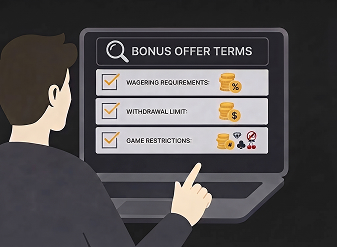
Before registering, review the offer terms to confirm you're eligible. Pay particular attention to the wagering requirements, wagering base, maximum withdrawal limit, and any game restrictions to determine whether the bonus is worthwhile.
02 Check the Qualifying Requirements

Confirm the minimum deposit, eligible payment methods, and whether a bonus code is required. Missing any of these could automatically exclude you from getting the bonus funds.
03 Make the Qualifying Deposit
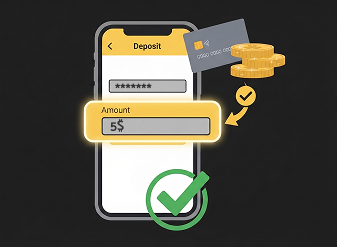
If the promotion requires a deposit, use an eligible payment method and deposit at least the minimum amount. If you pay with a credit card, check how your card issuer classifies the transaction, as casino deposits may be treated as cash advances and incur different fees or interest than standard purchases.
04 Claim and Use the Bonus
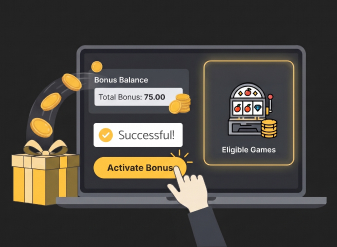
Once you've met the qualifying conditions, activate the promotion and confirm that the bonus has been credited to your promotional balance. Only eligible games usually count towards the wagering requirements.
05 Complete the Requirements and Withdraw

Track your wagering progress and make sure you meet all requirements before the bonus expires. Once the conditions have been fulfilled, complete any remaining verification steps and confirm that you meet the minimum withdrawal requirements before requesting a payout.
Bonus Terms That Quietly Reduce Your Value
The headline bonus tells only part of the story. Wagering requirements, the wagering base, and game weighting all affect the real value of an offer, but they are not the only conditions that matter. Here are a few more terms worth checking before claiming a bonus.
- Win Cap: This is the maximum amount you can withdraw from bonus winnings. If a promotion has a $500 max win, but you were able to get more than that from your gameplay, you will only be able to withdraw $500, forfeiting the rest.
- Expiry: Bonuses have deadlines for using the funds and completing the requirements. Once the deadline passes without clearing the conditions, the bonus and the winnings will expire and be removed from your account.
- Payment Exclusions: Some operators exclude certain payment methods from bonus offers. For example, a promotion may only be available when using an approved credit card or another qualifying payment option. Deposits made with excluded methods won’t qualify for the bonus.
- Excluded Games: Some games are excluded from the wagering requirements. You can still play them, but doing so won’t help you meet the bonus conditions.
- Bonus Abuse Clause: Online casinos have several clauses to prevent gaining unfair advantages in their promotional offers. Operators use them to protect against multiple accounts, bonus farming, automated play, suspicious or fraudulent activity, or other attempts to exploit a promotion. Breaching any stipulated conditions can result in forfeiting the bonus or even a ban from the casino.
- Max Bet: Many promotions limit the maximum stake allowed per game round or spin. Exceeding this limit may result in the bonus and any associated winnings being forfeited.
- KYC Verification: KYC is often required before your first withdrawal. Depending on the operator, you’ll need to confirm your identity and ownership of the payment method used. Failing to complete the verification process can delay or prevent withdrawals.
Editor’s Tip: Before you start playing, check the maximum stake and maximum withdrawal limit in the bonus terms. Knowing these limits in advance can help you avoid accidentally forfeiting bonus-related winnings.
Our Verdict: None of these terms is a dealbreaker on its own, but several combined can turn an attractive offer into one with limited value.
Common Mistakes
Most forfeited bonuses aren’t because of bad luck; they are the result of missed details in the terms. Here are some common pitfalls you should look out for.
Misunderstanding the Wagering Base: A 10x requirement can mean very different things depending on whether it applies to the bonus alone or the deposit and bonus. Always figure out the wagering base before calculating how much turnover you need.
Maximum Stake: Many casino bonuses specify a maximum stake per spin or game round. Exceeding it may result in the bonus and any associated winnings being forfeited.
Playing Excluded Games: A game can be available at the casino but excluded from the promotion. Time spent on these games may feel like progress, but it doesn’t move you any closer to clearing the requirement.
Missing Expiry Date: Bonuses have deadlines. If you don’t use it and complete the conditions before time runs out, you forfeit the bonus funds and winnings you got from it.
Withdrawing too Early: Making a withdrawal before completing the promotional conditions can trigger the loss of the bonus and, depending on the terms, any winnings linked to it.
Leaving Verification Too Late: Delaying KYC documents until after requesting a withdrawal can delay payout for days or longer, even when all other conditions are met.
Advantages and Disadvantages
Bonus offers can give you more playing funds and access to additional rewards, but they also come with conditions. Here are some perks and some drawbacks you should prepare for.
- Provides additional funds to extend gameplay
- No deposit bonuses and free spins can help you try a casino before committing more of your own money
- Cashback can offset part of your qualifying losses
- A wide range of bonus types suits different playing styles
- Winnings are locked until the bonus conditions have been met
- Maximum withdrawal limits can reduce the value of a promotion
- Game restrictions may limit where the bonus can be used
- Complex terms can lead to bonus forfeiture
How to Check Whether an Operator Is Licensed
Gambling with a licensed operator gives you an extra layer of protection. It means the operator is subject to independent oversight. Most licensed casinos display their licence number and issuing authority in the website footer. You may also find the licence issue date and the regulator’s logo there. If that information isn’t visible anywhere on the site, treat it as a warning sign.
For extra verification, visit the regulatory authority’s official website. Search its public database using the operator’s name or licence number. The licence should appear as an active match for the operator. If it doesn’t, or the details don’t match, the operator is unregulated.
Our Verdict: A licence doesn’t make every promotion worthwhile, but it gives you an important starting point when assessing an operator. Verify it through the relevant regulator’s official register, then assess the bonus terms separately.
How to Compare Bonus Offers
A bonus is only as good as its conditions. Always look beyond the headline percentage.
- Wagering Multiplier: The wagering multiplier tells you how many times you need to turn over the relevant wagering base. All else being equal, a lower multiplier means less qualifying turnover is required. This is why a 400% casino bonus with a steep multiplier can end up costing more real money than a smaller, better-termed offer.
- Wagering Base: Check whether the multiplier applies to the bonus alone or your deposit plus bonus. This shows the actual turnover required before bonus-related winnings become eligible for withdrawal. It can also make a major difference when comparing similar offers.
- Game Weighting: Not every operator applies weighting in the same way. Some count all eligible games at 100%, others scale contributions down by game type. Since weighting can quietly multiply how much you actually need to stake, it’s worth checking rather than assuming.
- Expiry: A bonus can have reasonable terms and still be difficult to use if the deadline is too short. A longer expiry gives you more time to complete the required turnover without rushing your play.
- Win Cap: The win cap determines how much you can realistically withdraw from bonus-related winnings. Always check for one before assuming an offer’s upside is unlimited. Reasonable terms overall matter more than a single generous number; a great multiplier paired with a low win cap is still a weak offer.
- Maximum Stake: Check the maximum stake allowed while the bonus is active. A low stake limit can make it more difficult to complete the wagering requirements before the promotion expires. Exceeding the limit may result in the bonus and any associated winnings being forfeited.
- Payment Methods: Deposits can typically be made via online banking, bank transfers, credit or debit cards, or e-wallets, though bonus eligibility may vary by method. For example, if the promotion is only available with certain payment methods and your preferred e-wallet isn’t one of them, the offer may not be suitable for you.
- Customer Support: Most operators offer 24/7 support, but responsiveness can vary. A quick question about the bonus terms is an easy way to gauge the quality of support before you need help with a withdrawal or account issue.
- Licensing: A valid licence provides greater transparency and access to regulatory oversight. As some jurisdictions restrict or prohibit gambling with unlicensed operators, checking the licensing status should come before evaluating any bonus offer.
Start with the wagering requirements and wagering base, as these determine the real cost of a bonus. Then check the game weighting and maximum withdrawal limit to see how achievable the offer really is. Finally, confirm the licence and support options before claiming the promotion.
Our Verdict: Comparing bonuses isn’t about finding the highest number in any single category; it’s about which offer holds up best across all of them at once.
How We Assess Bonus Offers
Every bonus we review is assessed against the same criteria. We evaluate the wagering requirements, wagering base, game weighting, maximum withdrawal limit, expiry period, and the operator’s licensing status. Ratings are based on the real value a player can access after the conditions have been applied, not the advertised percentage.
Our methodology looks beyond the marketing headline. A large bonus with restrictive conditions can score lower than a smaller offer with fairer terms and a more realistic chance of being converted into withdrawable winnings.
Our reviews remain independent. We do not accept payment in exchange for favourable coverage, and advertising partnerships never influence our ratings. If we receive a commission for referring players to a casino, it has no impact on our analysis or conclusions.
Responsible Gambling
Bonus offers are marketing tools, not a way to make money. Keeping that in mind matters just as much as understanding any other requirements from the promotion. Below are some tools offered by licensed operators to foster healthy gambling.
- Deposit Limits: These allow you to cap how much you can deposit over a daily, weekly, or monthly period. Lowering a limit usually takes effect immediately, but increases are often subject to a cooling-off period of up to 48 hours. Some operators also provide budgeting tools that estimate an affordable gambling limit based on your income and regular expenses.
- Loss Limits: A loss limit sets the maximum amount you can lose over a defined period. Once you reach the limit, you won’t be able to continue gambling within that period. They’re particularly useful for preventing loss-chasing, the instinct to keep playing specifically to clear a wagering requirement after a losing session.
- Reality Checks: A pop-up notification alerts you once a set amount of time has passed during a session. This prompts you to consciously continue or stop. Some operators go further by automatically logging you out after you’ve dismissed multiple extensions in a row.
- Time-outs: A time-out lets you take a short-term break from gambling without permanently closing your account. Depending on the operator, you may be able to choose a period ranging from 24 hours to several months. Once activated, deposits and wagering are disabled entirely for the duration. Most casinos don’t allow a time-out to be ended early. Once it’s activated, it remains in place until the selected period has expired.
- Self-Exclusion: Self-exclusion is the longer-term version of a time-out. It blocks you from gambling for a set period, which can range from several months to an indefinite period. Many operators also remove self-excluded users from marketing lists entirely, so you’re not re-invited back with promotions during the exclusion period.
- Self-Assessment Tools: Some gambling sites provide self-assessment questionnaires. It asks about your gambling habits, such as how often you play, how much you spend, and whether gambling is affecting other areas of your life. The results can help you identify patterns in your behaviour and give you a clearer picture of where you are. Whether your gambling is still within the limits you’ve set or you are getting out of control
- Support Organisations: Independent responsible gambling organisations offer free, confidential support regardless of which operator you play with. This includes helplines, counselling referrals, and self-exclusion schemes that can cover multiple sites at once.
What to Watch Out For: If you find yourself increasing deposit limits regularly or skipping past reality check pop-ups without reading them, those are early signs worth taking seriously.
Our Verdict
A casino bonus can add value, but only when its terms match the way you already play. Before claiming an offer, look beyond the headline percentage and compare the wagering requirements, game restrictions, expiry period, withdrawal conditions, and maximum win limits. A smaller bonus with fairer terms can often be worth more than a larger promotion with restrictive conditions.